
I’m not physically sick.
And I’m not having a mental health crisis.
But today, I wrote my own eulogy. It’s a thought I’ve been contemplating for a while.
I simply wanted to write down the kind of man I hope to become, while I still have time to become him.
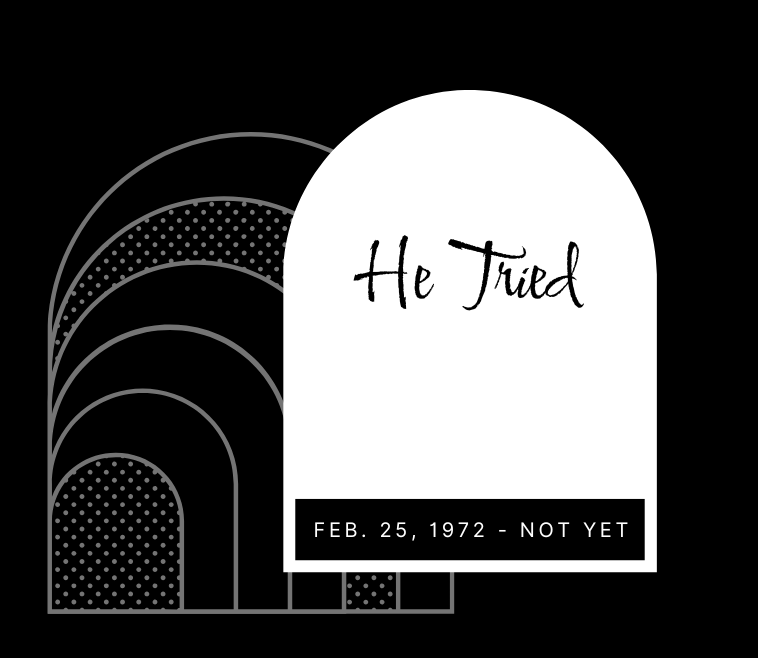
If you had to summarize his life in two words, they would be simple: “He tried.”
Not “He was impressive.” Not “He built something big.”
He tried.
He tried to follow Jesus. He tried to love his wife well. He tried to raise his children with biblical conviction and kindness. He tried to shepherd the Church faithfully.
He tried to love Jesus more than ministry.
He tried to teach and preach what the Spirit insisted, not what would impress or appease people.
He tried to let Scripture speak louder than his personality. He tried to be Spirit-led in the room, not just well-prepared on paper.
He did not always get it right, but on the days he failed, he prayed, got up early the next day, and tried again.
He tried at home first.
Even though we all know William was Lisa’s full-time ministry, he tried to love her in a way that made her life easier. There were seasons when she carried more than she should have. But he grew. He learned. He apologized. He tried again.
There are conversations he would like to revisit and moments he would slow down if he had them back.
He tried to be productive and helpful at home. He tried to be present, even when work was never-ending.
He sometimes confused busyness with effectiveness, but he learned over time that presence is love.
He worked hard to be a good father to Will, Brittany, and Caleb. He tried to be serious and silly, but usually lived on the serious side. But he tried to be funny.
He did not always balance home life well. But he grew in wisdom as he got older.
He tried to love people without using them.
He believed leadership was servanthood. He believed character mattered more than competency. He believed the Church was a people to belong to, not a crowd to impress.
He celebrated every salvation, rededication, and water baptism like they were miracles. He grieved when church attendance declined, but he refused to send people on a guilt trip. He felt the weight of backsliders and empty seats more than most people knew.
Sometimes he wanted faster results, but he kept choosing faithfulness over fads.
Longtime friend Pastor Jonathan English says, “William was a good friend. He saw the importance of investing in others and being faithful to what God had called him to do, even when it was difficult.”
Another friend, Jonathan Fitzpatrick, said, “He lived with a genuine desire to honor God and lift people. Even on his hardest days, he kept reaching, kept trying, and kept pointing others toward hope.”
He tried to build the Church in a way that made others better.
He believed in and loved the local church and the Church at large. He believed his covenant with God and God’s people mattered more than his personal convenience.
As a teacher, he tried to clarify doctrine.
As a preacher, he tried to strengthen others.
As a leader, he tried to resource his peers.
As an imperfect man, he tried to make transparency normal.
As a servant of God, William was rarely flashy. But he was faithful.
He tried to stay human.
He enjoyed writing. But in person and in prose, he quoted songs and Scriptures as if he were receiving royalties.
He liked playing disc golf. And quite often when he missed a long putt, he’d say, “well boys, if someone asks you about this ol’ man, you tell them, HE TRIED.”
He preached through every trial of life and moved forward as if going back was not an option. He’d often quote his friend, Pastor John Whitaker, and say, “Reverse is broken!”
He sometimes battled vertigo and anxiety in quiet ways most people never saw. But he kept showing up. He kept preaching. He kept moving forward. He did not let them write his final chapter.
He lived by a simple mantra that he’d say to himself: “I don’t have to be fast. I have to be moving.”
William tried to finish well.
If you ever asked how he was doing, his reply was typically, “I am well.” He didn’t believe in his own goodness, but trusted in God’s grace to make him whole, keep him safe, and take him Home.
He believed in slow sanctification with many mile markers of deliverance along the route. He believed that faithfulness over decades matters more than an occasional bad day.
William hoped to be remembered by his family and friends as faithful.
If you are looking for perfection, you will not find it here. If you are looking for a man who loved Jesus, loved his family, loved the Church, and kept trying even when it was hard, that was William.
He tried.
And by the grace of God, that was enough.

 williamstricklandblog.com